Gita Jayanti marks the day Shri Krishna spoke the Bhagavad Gita to Arjun on the field of Kurukshetra. It falls on Margashirsha Shukla Ekadashi, also called Mokshada Ekadashi. Many families read the Gita at home and dress Krishna in a dignified, regal shringaar.
The Parthasarathi look
On this day Krishna is remembered as Parthasarathi, Arjun's charioteer and guide. The shringaar is royal but calm:
- Poshak: yellow (pitambar), the colour most associated with Krishna, or cream and gold.
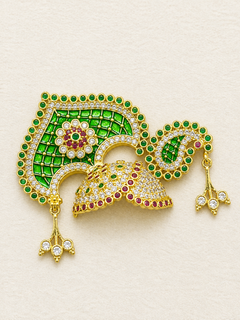
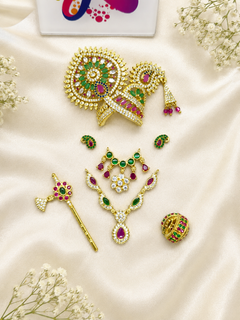
- Mukut: a tall gold mukut with a peacock feather, or a mor mukut.
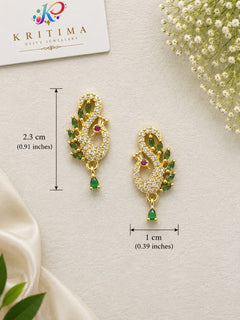
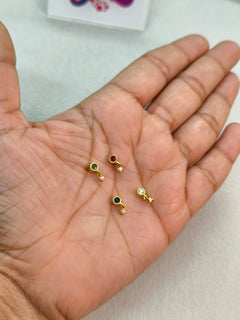
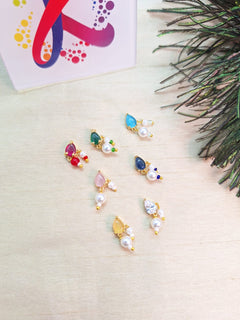
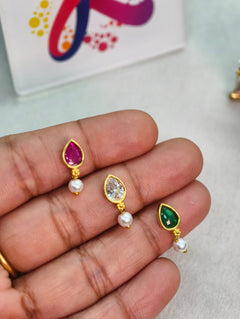
- Kundal: makar kundal from our earrings collection.
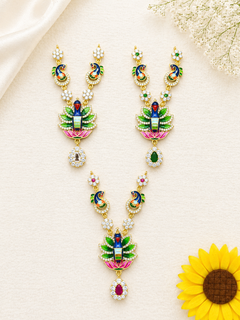
- Haar: a long haar, plus a vaijayanti or tulsi mala if you have one.
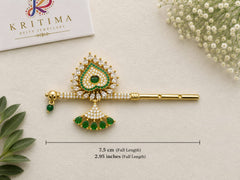
- Bansi: keep his bansi in hand, as always.
Keep it sattvic
Because it is an Ekadashi, many families keep the day simple: fewer, finer pieces, fresh tulsi, and a fruit or sabudana bhog. A light pearl haar suits this quieter mood well.
A simple Gita path at home
- Dress Thakur ji and light a diya.
- Read one chapter of the Gita, or the whole of Chapter 12 (Bhakti Yoga) if time is short.
- Offer tulsi and a fruit bhog.
- End with aarti and a few minutes of naam jap.
If your family follows the Ekadashi vrat, our daily seva guide has tips for keeping the routine simple on fasting days.
Frequently asked questions
Should I dress Laddu Gopal or a standing Krishna for Gita Jayanti?
Either is lovely. Laddu Gopal can wear a regal mukut and pitambar, and a standing Krishna or Radha Krishna pair suits the Parthasarathi look especially well.
What colour is best for Gita Jayanti?
Yellow is most common, as Krishna is called Pitambar, the one dressed in yellow. Cream and gold also work well.
 Laddu Gopal Ji Set
 Mukut
 Haar
 Choker
 Kalangi
 Bansi