Dev Uthani Ekadashi, on Kartik Shukla Ekadashi, marks the day Bhagwan Vishnu wakes from his four-month rest of Chaturmas. Auspicious ceremonies begin again, and many homes celebrate Tulsi Vivah, the wedding of Tulsi Maa with Shaligram ji or Krishna, on this day or the next.
It is one of the sweetest festivals to dress for, because Thakur ji becomes a dulha.
Dressing Thakur ji as the groom
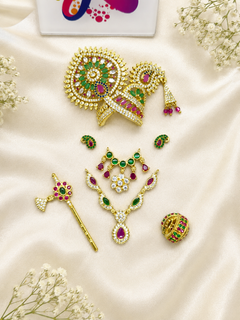
- Poshak: a sherwani-style poshak in cream, gold, red or yellow.
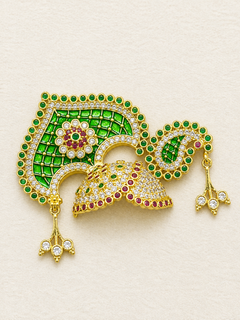
- Mukut and kalangi: a tall mukut or a pagadi with a kalangi gives the classic groom look. Browse pagadi attachments for sehra-style pieces.
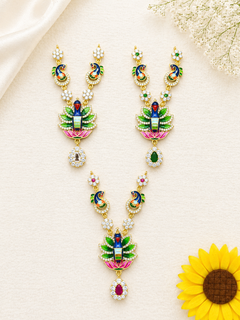
- Haar: a long haar, ideally layered with a flower mala on the day.
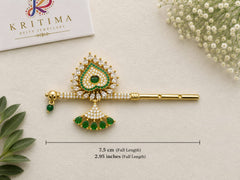
- Bansi and kamarband: finish with a festive bansi and kamarband.
If your family worships Shaligram ji, the shringaar is usually simpler: a small mukut or chhatra, tilak, and a fine mala.
Dressing Tulsi Maa as the bride
- A red or pink chunri draped over the plant or the Tulsi chaura.
- Small bangles, a bindi and sindoor.
- A small haar or mala hung gently on the plant, never tied tight around the stem.
A simple Dev Uthani checklist
- Clean the mandir and draw a rangoli or chowk.
- Keep sugarcane, seasonal fruits such as water chestnut (singhara) and a diya ready.
- Dress Thakur ji before the puja so the ceremony can flow without pauses.
- Keep the bride and groom shringaar in matching colours for beautiful photographs.
Frequently asked questions
Can I use Laddu Gopal for Tulsi Vivah?
Yes. Many families dress Laddu Gopal as the groom. Others use Shaligram ji. Both are common; follow your family tradition.
How do I put jewellery on a Tulsi plant without harming it?
Drape, don't tie. Rest a light mala over the branches, keep the chunri loose, and remove everything after the ceremony so the plant can breathe.
 Laddu Gopal Ji Set
 Mukut
 Haar
 Choker
 Kalangi
 Bansi